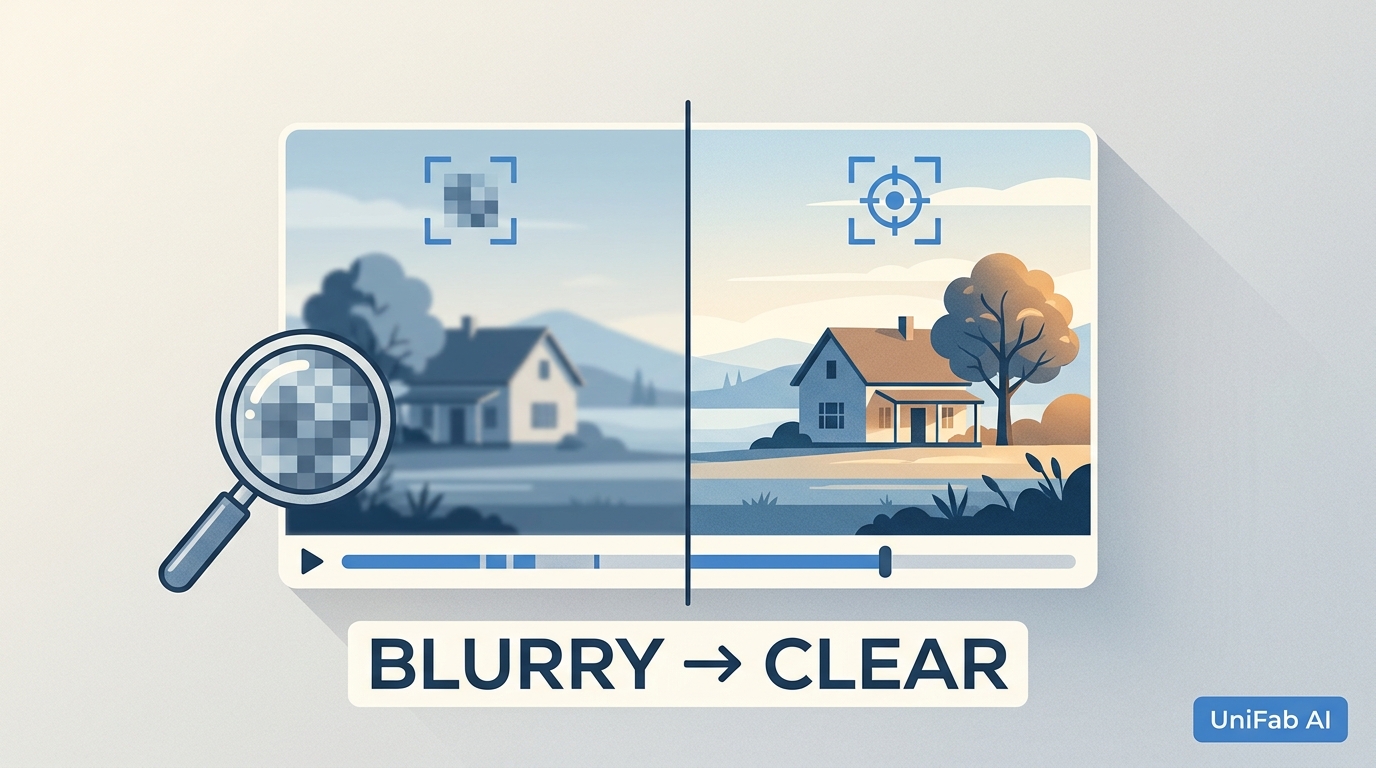
Video restoration is the process of recovering watchable quality from damaged or degraded footage by removing noise, rebuilding sharpness, correcting faded color, stabilizing motion, and keeping detail consistent between frames. In 2026, the heavy lifting is handled by AI models trained on millions of degraded-to-clean video pairs, which means a VHS home movie digitized at 480p can now be pushed toward a presentable 1080p or 4K master in hours rather than weeks. This guide breaks down how modern AI restoration actually works, what it can and cannot fix, which tools lead the field, and how to pick between doing it yourself and paying a studio. It leans on hands-on testing with VHS transfers, compressed social clips, and 8mm film scans across a Windows RTX 4060 rig and an Apple M2 Pro laptop.